Omega R17.8 Chronometer (1942)
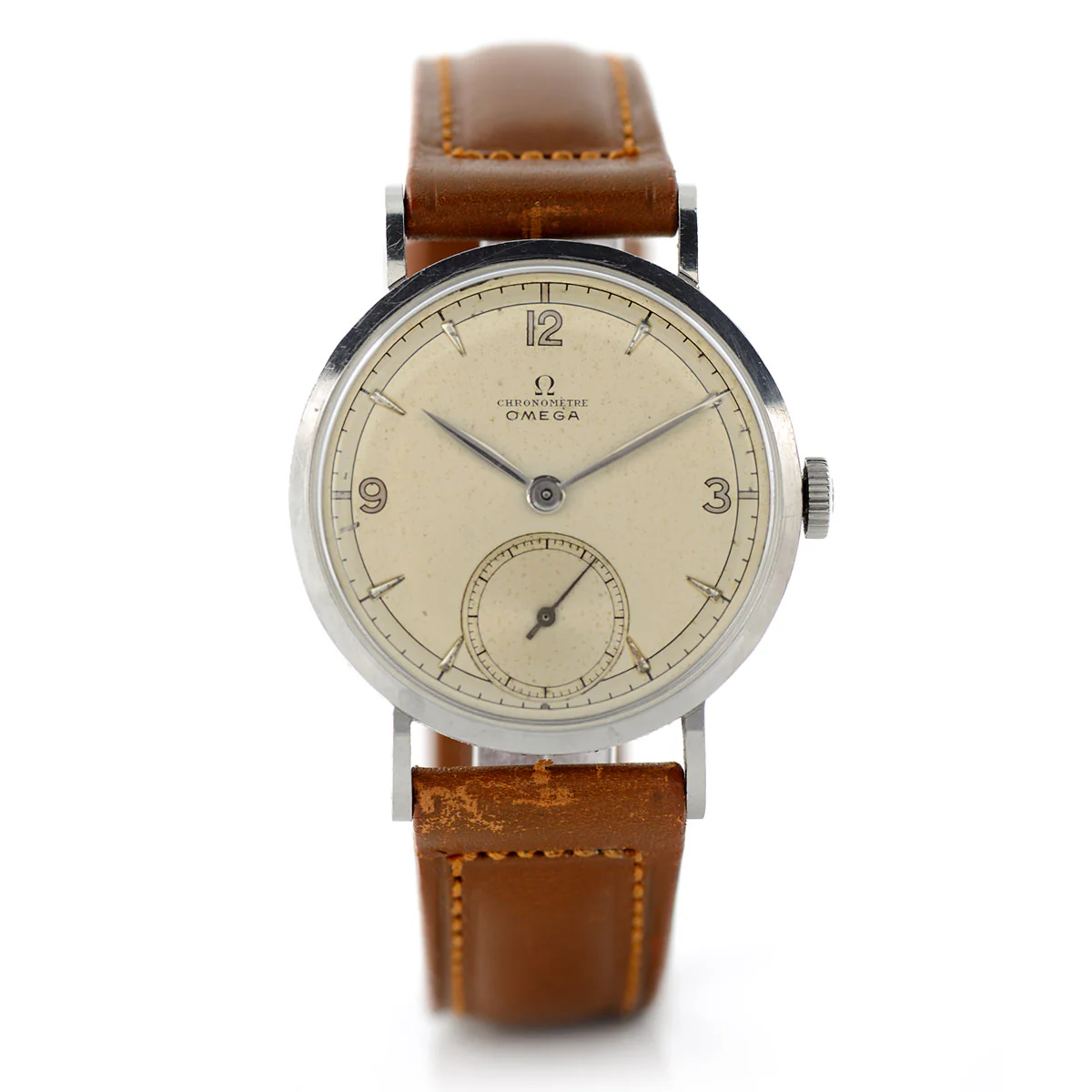
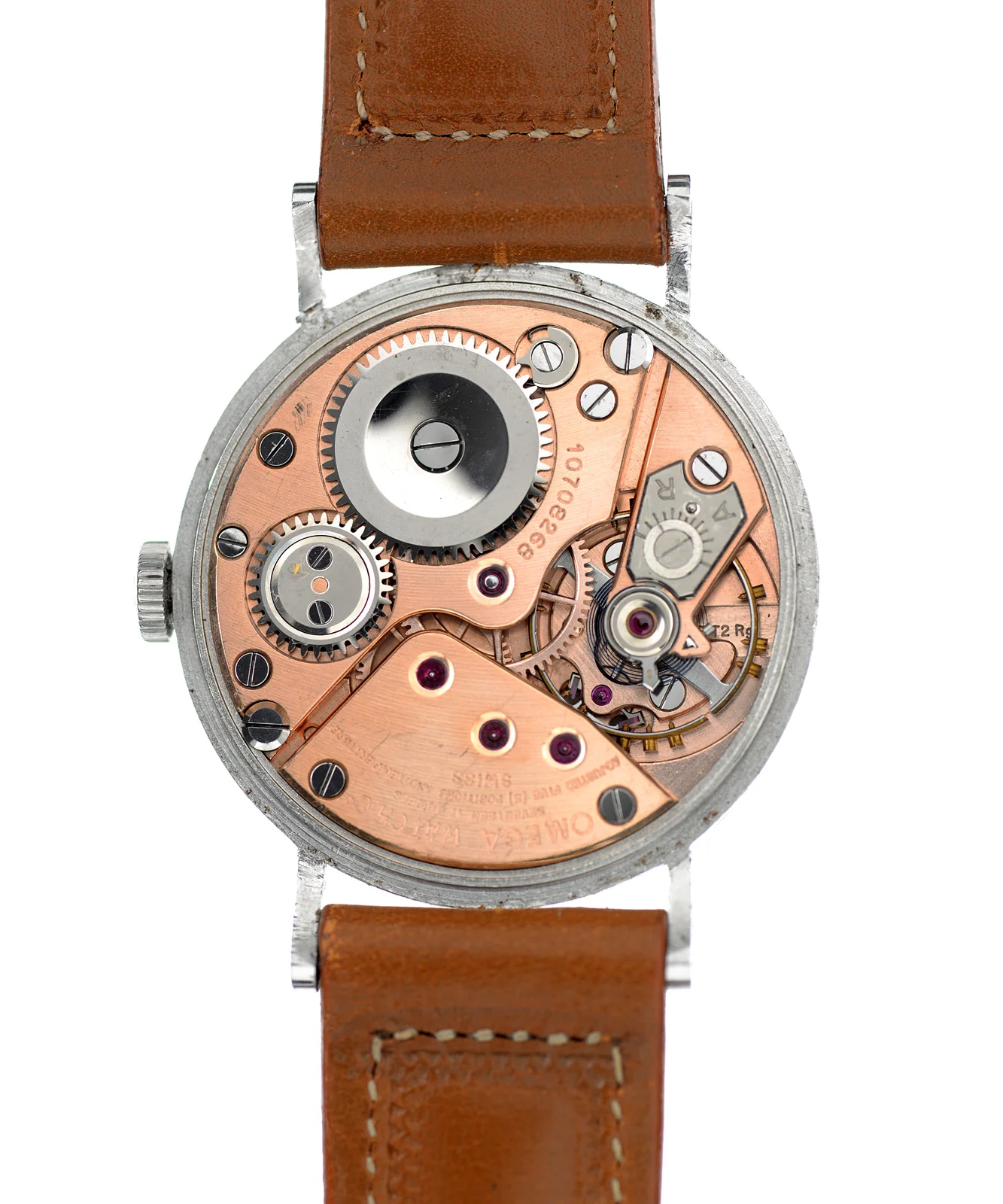
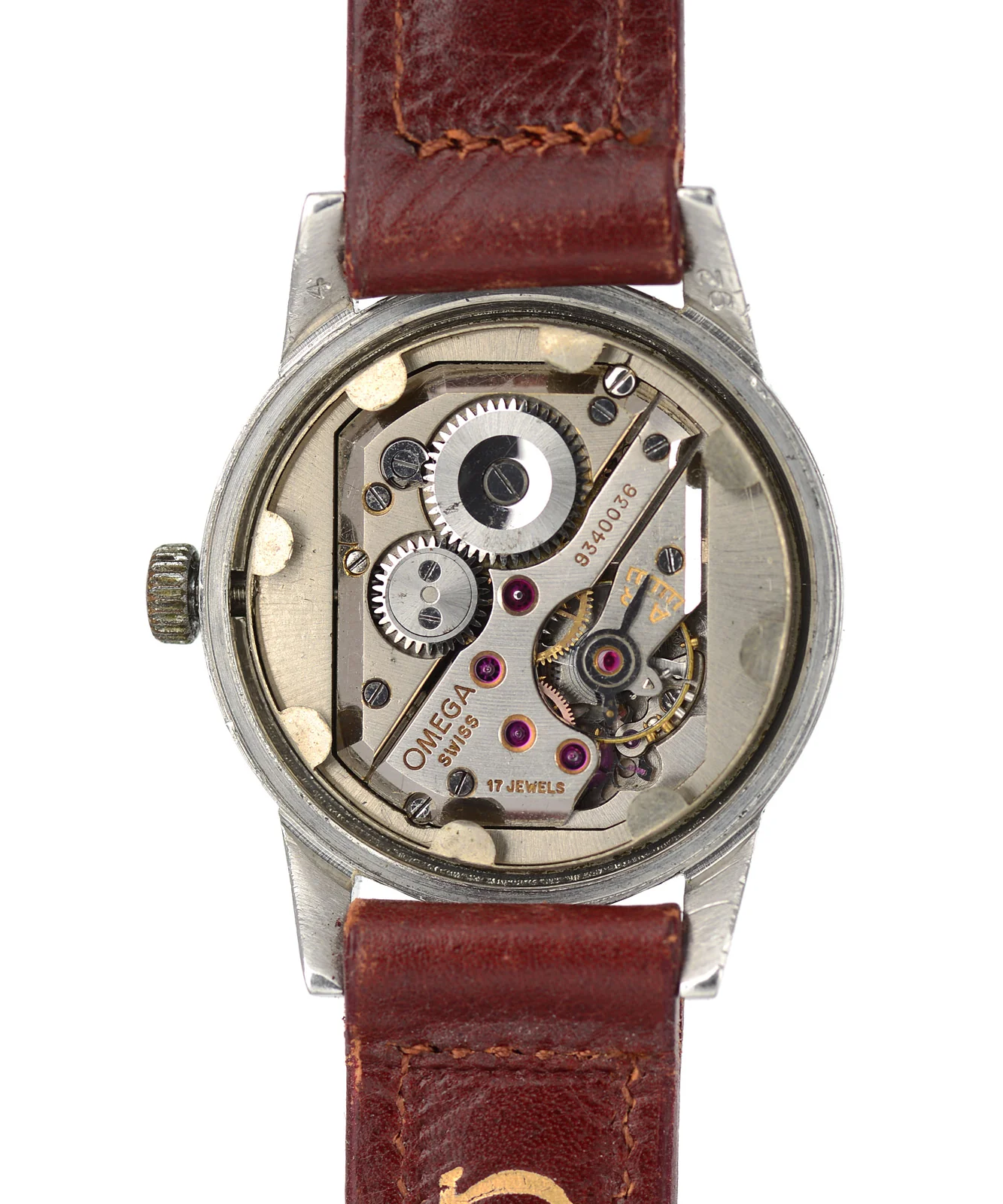
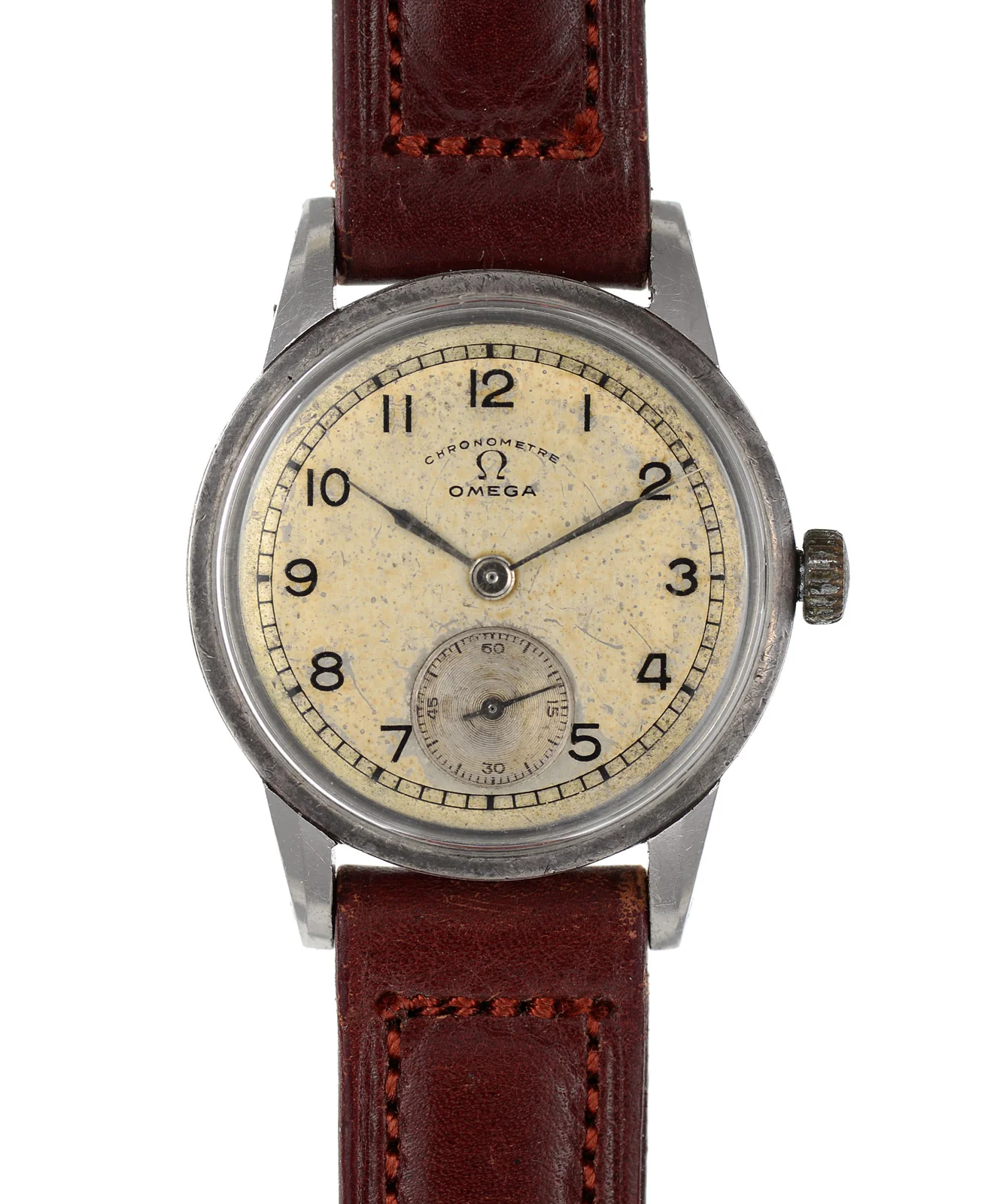
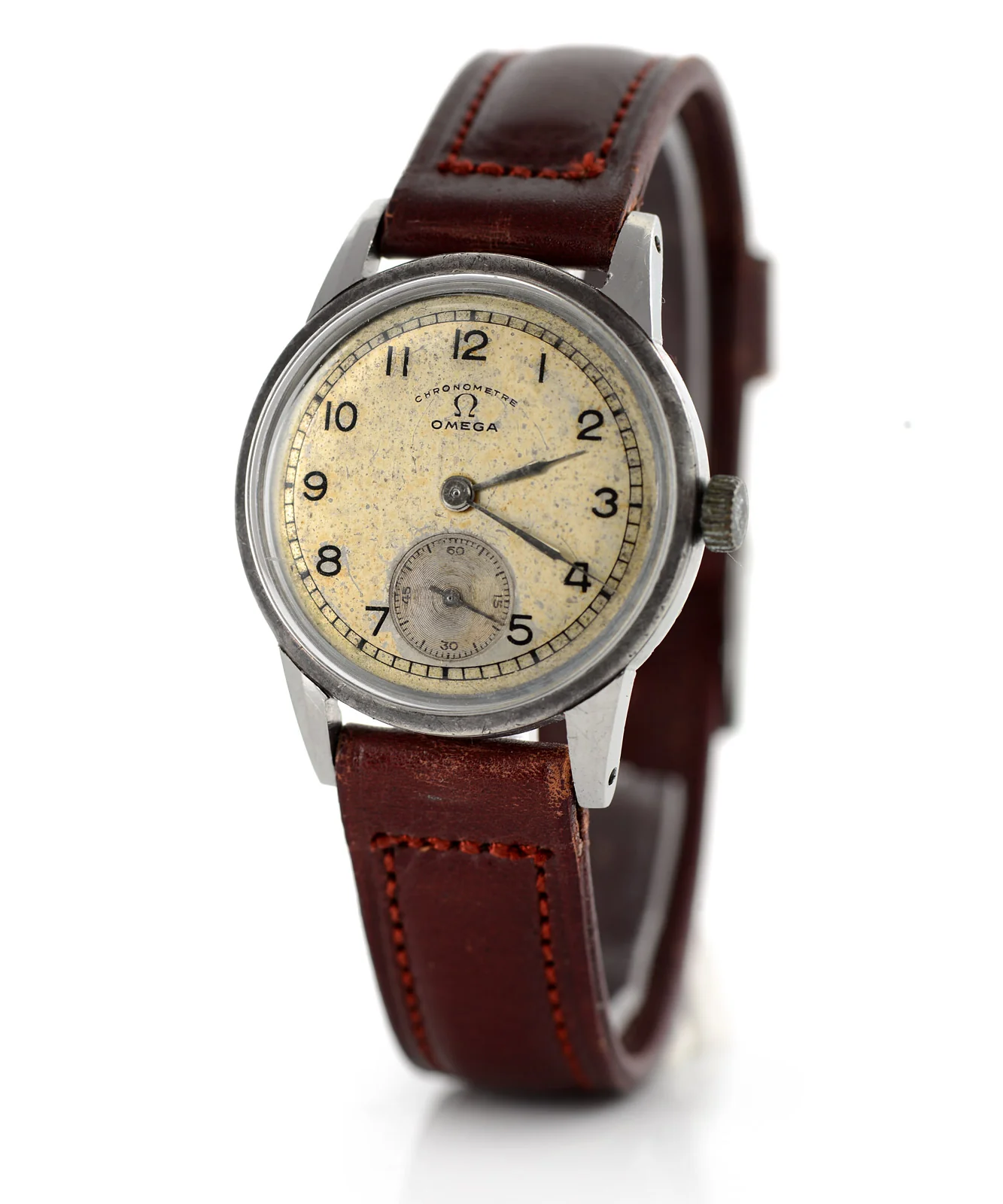
This is an extremely rare Omega manual wind chronometer dating from spring 1942. The movement of this watch is unusual - normally Omega concentrated on producing chronometer using the 30T2 movement. Omega produced a very small number of these movements which were regulated to achieve chronometer performance (that is a deviation under test conditions of no more than a few seconds gain or loss per day).
One can only speculate about the reasons Omega regulated these smaller movements - perhaps it was simply a technical exercise to show that any of their movements could be regulated to a very high standard, or perhaps they were hedging their bets that smaller, tonneau shaped watches would come back into fashion as they had done in the 1920s and 30s.
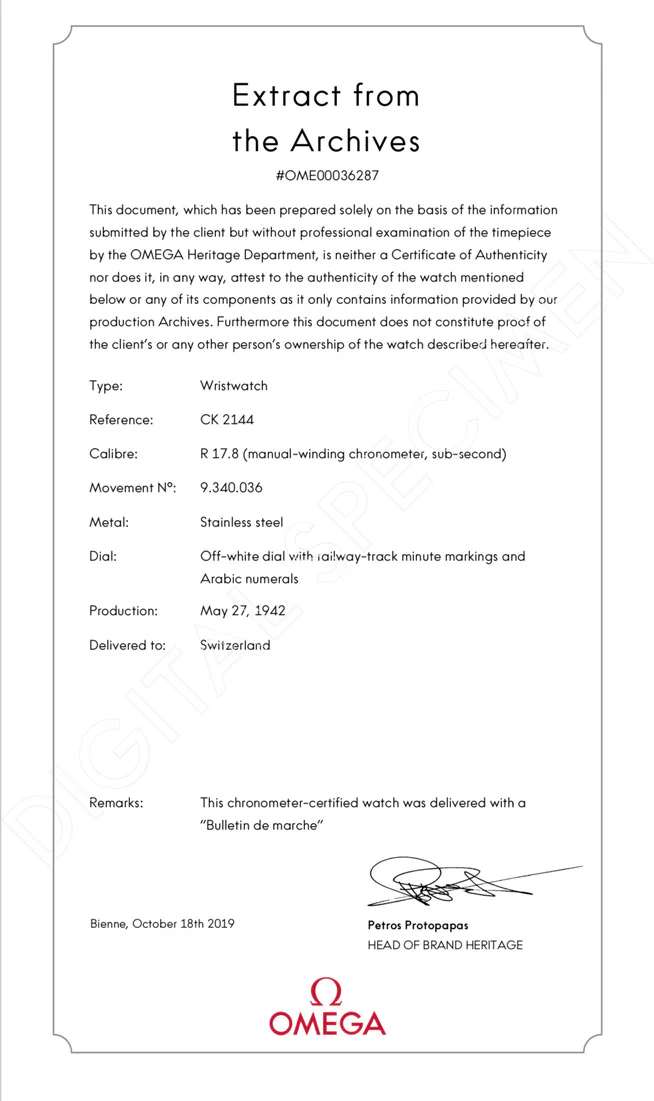
An extract from Omega's archives is included as part of this - the extract states that the watch was originally delivered with a "Bulletin Du Marche" that is a certificate showing it had passed the chronometer tests.
There is a very interesting and detailed exploration of the Omega manual wind chronometers here
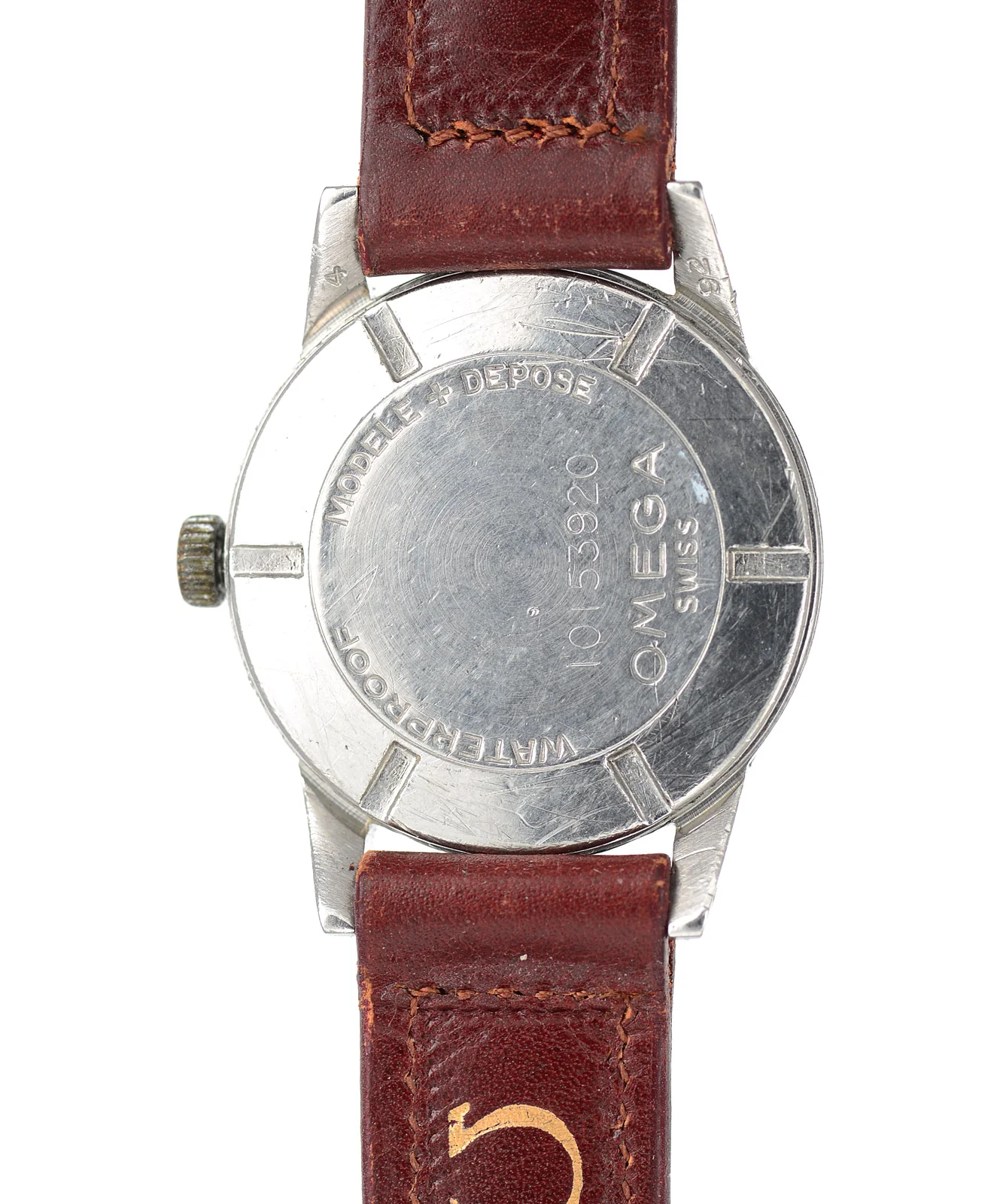
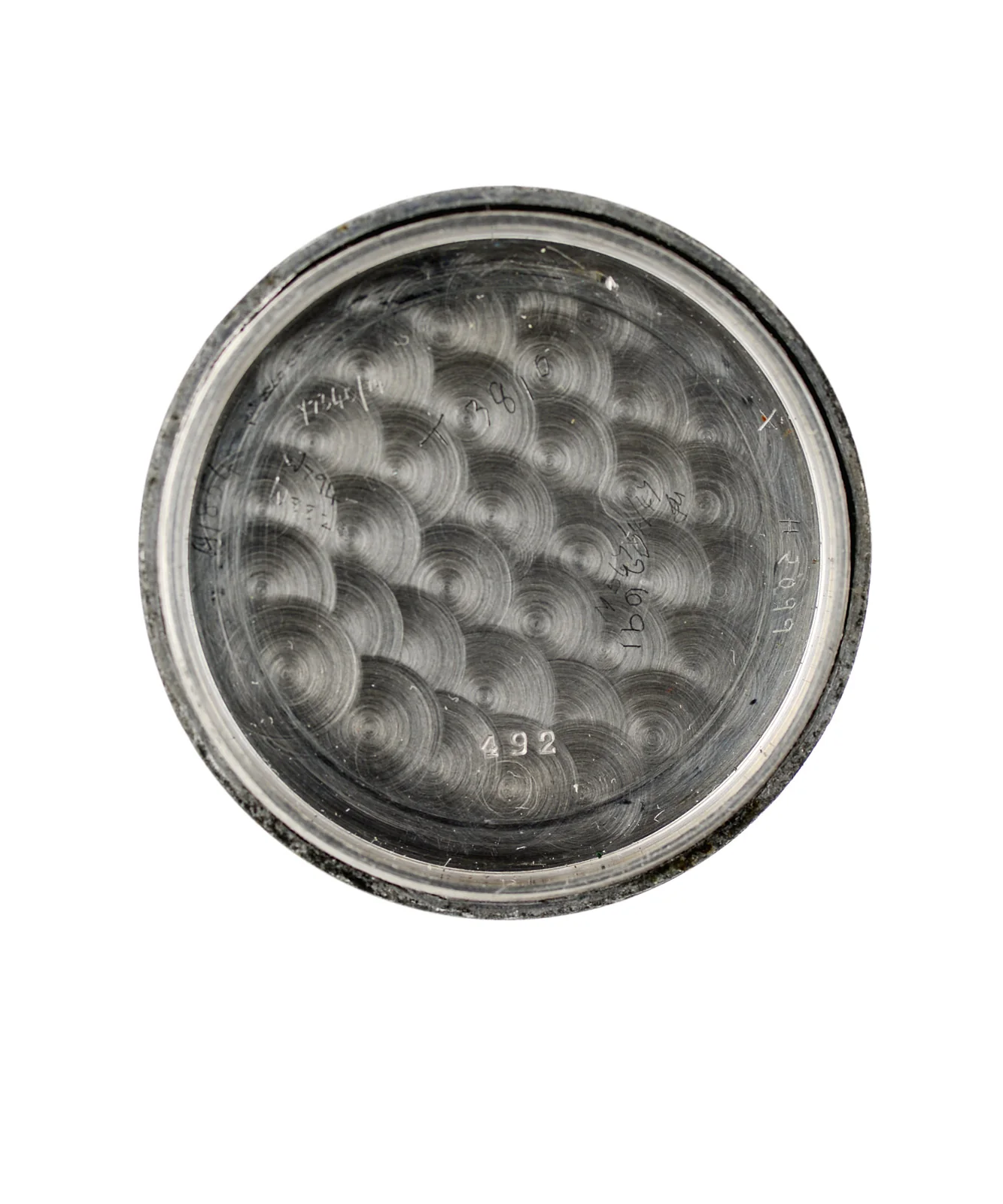
The stainless steel case is a small size at 30mm, although presumably intended as a man's watch. It has a screw-back to significantly improve the water resistance. The dial has a nice, even patina where the varnish has degraded, but not significant losses to the printing.
The watch has been fully serviced and regulated and performance is now very good. It comes with a nos Omega strap and buckle.
Case diameter (excluding winding crown): 30mm
Case material: stainless steel
strap width: 16mm
time keeping: grade A
Original: $1,950.00
-70%$1,950.00
$585.00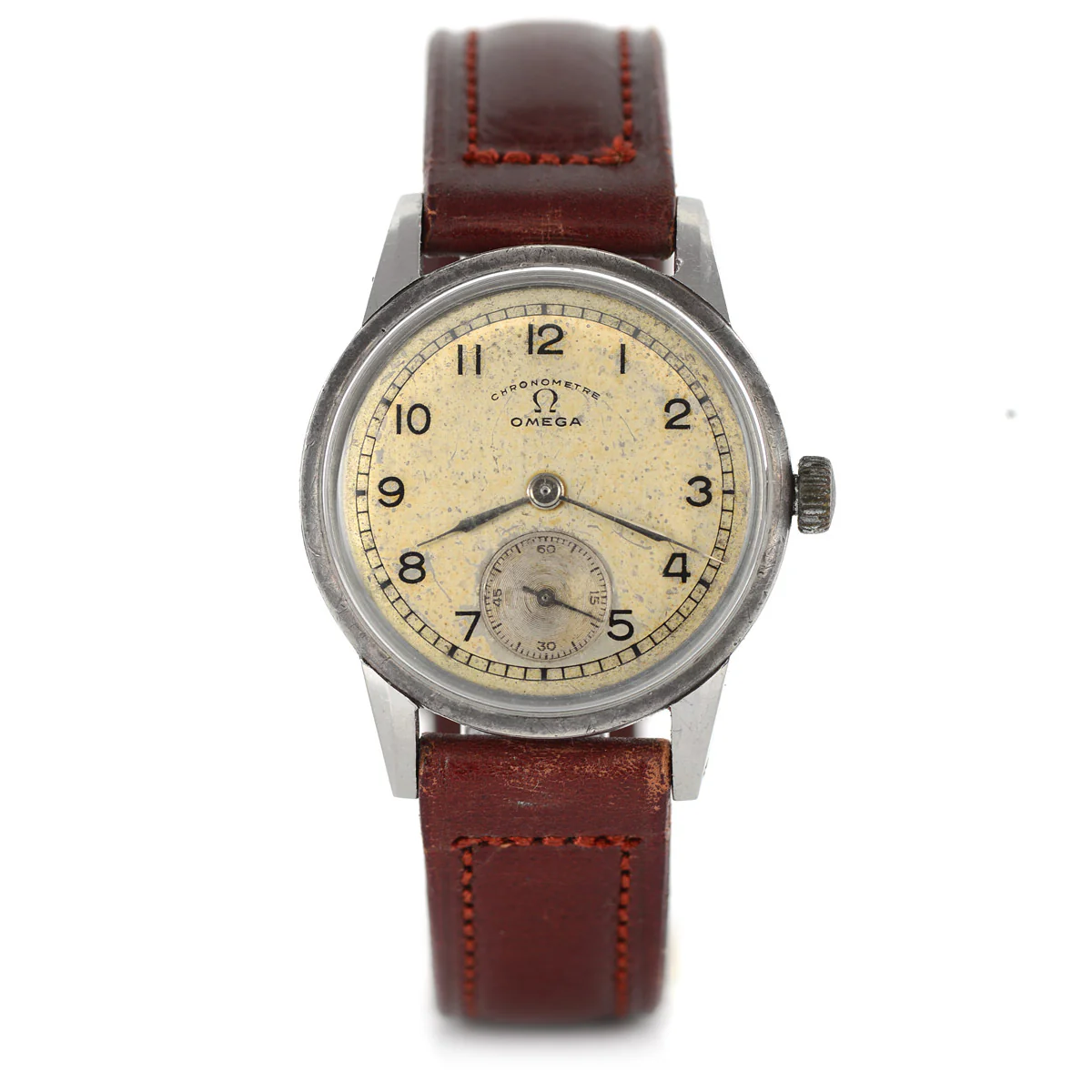
Description
This is an extremely rare Omega manual wind chronometer dating from spring 1942. The movement of this watch is unusual - normally Omega concentrated on producing chronometer using the 30T2 movement. Omega produced a very small number of these movements which were regulated to achieve chronometer performance (that is a deviation under test conditions of no more than a few seconds gain or loss per day).
One can only speculate about the reasons Omega regulated these smaller movements - perhaps it was simply a technical exercise to show that any of their movements could be regulated to a very high standard, or perhaps they were hedging their bets that smaller, tonneau shaped watches would come back into fashion as they had done in the 1920s and 30s.
An extract from Omega's archives is included as part of this - the extract states that the watch was originally delivered with a "Bulletin Du Marche" that is a certificate showing it had passed the chronometer tests.
There is a very interesting and detailed exploration of the Omega manual wind chronometers here
The stainless steel case is a small size at 30mm, although presumably intended as a man's watch. It has a screw-back to significantly improve the water resistance. The dial has a nice, even patina where the varnish has degraded, but not significant losses to the printing.
The watch has been fully serviced and regulated and performance is now very good. It comes with a nos Omega strap and buckle.
Case diameter (excluding winding crown): 30mm
Case material: stainless steel
strap width: 16mm
time keeping: grade A